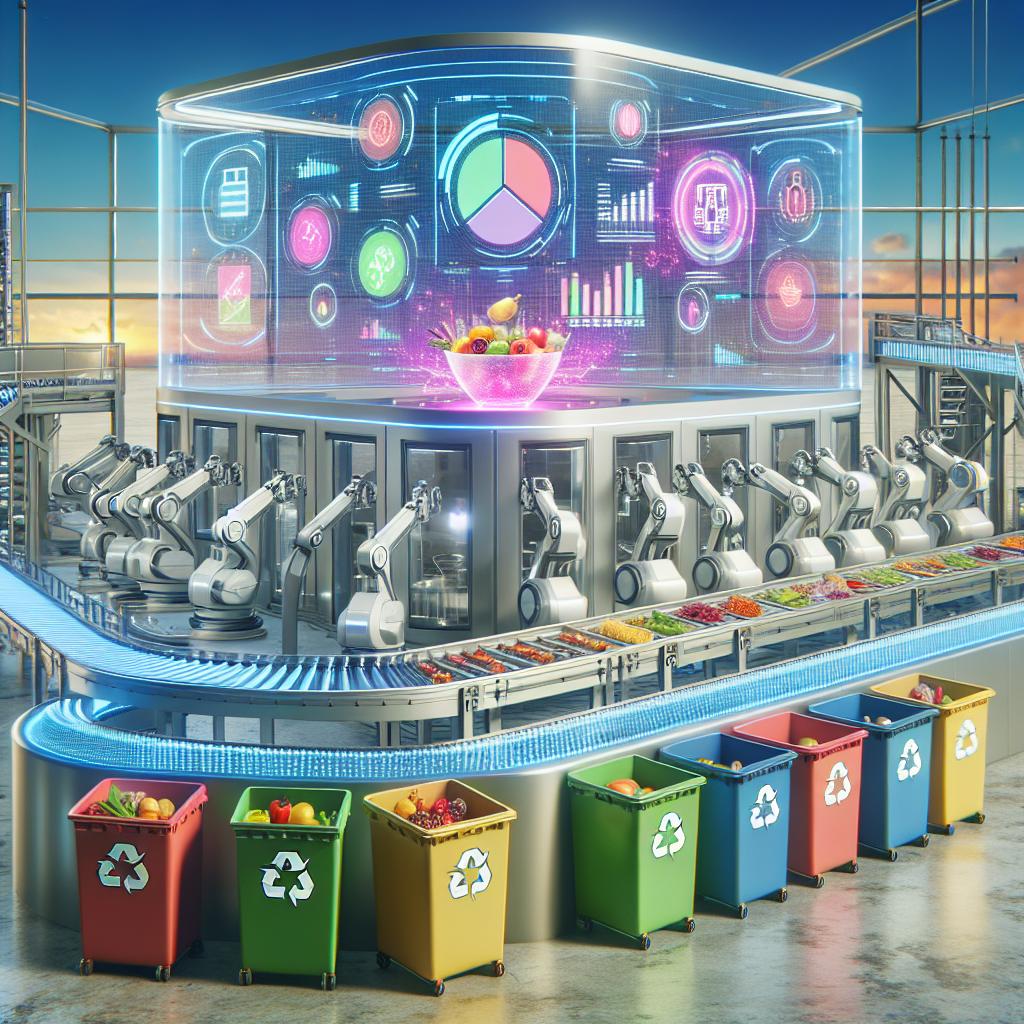
AI recipe optimization helps you reduce food waste where it starts: the formulation, the batch size, and the day‑to‑day decisions around production and inventory.
Instead of relying on static recipes and gut‑feel forecasts, you can balance taste, quality, nutrition, cost, and sustainability—consistently and measurably.
Practical goal: less waste (ingredients, rejects, expired stock) without compromising taste or quality.
Lower ingredient waste by optimizing ratios, substitutions, and batch sizing inside your specs.
Fewer rejects & rework by predicting variability (raw material + process) and preventing out‑of‑spec batches.
Less overproduction by aligning production to demand, shelf life, and real inventory—product by product.
Better traceability with clear constraints, approvals, and auditable decision logs (critical for regulated environments).
This page focuses on operational AI (optimization + prediction + governance). If you’re exploring “AI recipe generators” for consumer content, the approach and success metrics are different.
Core concept
What AI recipe optimization means (beyond “a smarter recipe generator”)
In the food industry, “recipe optimization” is rarely about inventing new recipes from scratch. It’s about finding the best version of a recipe you already produce,
under real constraints—then keeping performance stable as reality changes.
Think of it like this: you define the rules (taste/quality specs, nutrition targets, allergens, regulatory constraints, equipment limits, supplier variability, cost and waste goals).
The AI helps you choose the best formulation, batch size, and production decisions that satisfy those rules—with less trial‑and‑error and fewer costly mistakes.
The three building blocks that make it work
Prediction: models that anticipate demand, shelf‑life, quality drift, and process variability.
Optimization: a constraint‑aware engine that proposes ingredient ratios / substitutions / batch sizes that hit targets.
Operational delivery: integration with your tools (ERP/MES/LIMS/PLM), approvals, monitoring, and clear dashboards so teams can actually use it.
The highest ROI usually appears when recipe decisions are connected to the systems where decisions happen (planning, procurement, production, QC, inventory), not left as a standalone spreadsheet exercise.
Where waste happens—and where AI typically creates the fastest wins
Waste is rarely “just one problem.” It’s a chain reaction: forecast error → wrong batch size → leftover inventory → expiry → write‑offs. Or raw material variability → quality drift → rejects → rework.
AI helps you break that chain by improving decisions at the most leverageable points.
Ingredient prices and availability fluctuate, and reformulation is often slow because you need to protect taste, texture, labeling, nutrition, and compliance.
AI can explore many viable alternatives quickly—while respecting constraints—so teams test fewer dead‑ends and ship improvements faster.
2) Batch sizing and production planning (overproduction + short shelf life)
Overproduction is one of the biggest drivers of waste in perishable categories. When batch sizes are driven by “standard runs” instead of demand signals and shelf‑life realities,
leftovers become inevitable. Demand forecasting + planning optimization helps you produce the right quantity at the right time.
3) Quality variability (rejects, rework, and giveaway)
Raw materials vary (moisture, fat, protein, Brix, acidity), and processes drift (temperature, mixing time, fill weights, sealing). AI models can learn which combinations create risk,
so you can adjust recipes or process setpoints proactively.
4) Inventory and FEFO execution (expiry and write‑offs)
If your inventory system knows stock quantity but not “effective freshness,” it’s easy to make the wrong picking and replenishment decisions.
AI‑supported inventory rules can prioritize FEFO (first‑expired‑first‑out) with more confidence and reduce expiry losses.
Waste reduction is also a sustainability lever: less waste usually means lower emissions per unit produced and better resource efficiency.
If you’re unsure where to start: pick one product family (high volume + frequent waste pain) and one measurable KPI (e.g., ingredient waste %, rejects, expiry, or overproduction).
A focused pilot beats a broad initiative every time.
High‑impact use cases for food manufacturers & industrial kitchens
Below are the use cases that typically combine strong business impact with clear measurability. You don’t need to do all of them at once—start with the one closest to your current waste driver.
Cost‑aware reformulation without breaking taste or compliance
Use optimization to propose ingredient mixes that meet sensory and regulatory constraints while reducing cost volatility and limiting waste from failed trials.
This is especially powerful when you have frequent supplier changes or tight margin categories.
Ingredient substitutions with guardrails (allergens, additives, processing limits)
Fewer physical trials, less scrap, faster iteration cycles
Batch size optimization to reduce overproduction
Combine demand forecasting, shelf‑life constraints, and production limitations (min run, changeovers, labor) to recommend batch sizes that minimize leftovers and write‑offs.
Less end‑of‑day discard (central kitchens) or end‑of‑week expiry (manufacturing)
Better planning for promotions and seasonality
More stable service levels with less waste
Predict quality drift and prevent rejects
Quality issues often happen when “small” variations align: ingredient moisture + ambient temperature + mixing time + operator shift.
Predictive models can flag risk early and recommend adjustments before an out‑of‑spec batch is produced.
Lower reject rate and rework
Reduced giveaway (over‑dosing ingredients “just in case”)
More consistent customer experience
Shelf‑life and freshness optimization for perishables
In perishables, “days of life left” is as important as quantity. AI can incorporate storage conditions, packaging variables, and historical behavior to help teams make smarter make‑to‑stock decisions.
Better allocation and replenishment decisions
Fewer surprises from “sudden” spoilage
Improved FEFO execution with more confidence
Inventory optimization for ingredients and packaging
Too much inventory creates expiry and quality risk. Too little creates service failures and last‑minute substitutions that can harm quality.
Optimization helps you find the right balance while considering lead times and demand variability.
Reduced expired ingredients and obsolete packaging
Fewer emergency purchases and production disruptions
Clearer reorder points by ingredient criticality
Smarter portioning and menu planning (central kitchens & hospitality)
When portions and production plans are aligned to demand patterns, kitchens waste less and maintain consistency. AI helps detect trends (weekday, season, events) and adjust prep plans.
Less plate waste and prep waste
Better rotation of specials and limited‑time items
Improved purchasing accuracy
Quick self‑check: if you’re frequently dealing with reformulations, volatile raw materials, short shelf life, or rejects/rework,
recipe optimization is usually one of the most direct paths to measurable improvement.
What data you need (and how to start if it’s messy)
You don’t need “perfect data” to start, but you do need enough signal to measure outcomes and learn. The most successful projects define a small, trustworthy dataset for the pilot,
then expand coverage product by product.
Practical tip: when systems are fragmented, a pilot can start with exports (CSV) and a lightweight data layer—then mature into automated integrations as value is proven.
The key is to keep definitions consistent: what counts as “waste,” “reject,” “giveaway,” and “overproduction.”
The fastest pilots usually pick one product family, one site/line, and one measurable outcome. That creates clean learning and faster adoption.
Implementation roadmap: pilot → production (without getting stuck in “demo mode”)
Successful AI in the food industry is a delivery discipline: clear KPIs, integration to the tools people use, and an operating model the plant or kitchen trusts.
Here’s a roadmap that keeps momentum while controlling risk.
Step 1 — Define objectives and non‑negotiable constraints
What are you optimizing for: waste %, cost, yield, service level, quality stability?
Which constraints cannot be violated: allergens, labeling, nutrition targets, process limits, brand taste profiles?
Step 2 — Build a baseline and measurement plan
Before changing anything, you need a baseline: current waste, rejects, expiry, overproduction, and cost variability. This is what makes improvement undeniable.
Step 3 — Model + optimize + validate (offline first)
Start with “offline” evaluations using historical data: can the system predict outcomes and propose better decisions in simulation? This prevents costly live mistakes.
Step 4 — Pilot with a human‑in‑the‑loop workflow
In production environments, “recommend then approve” is often the right starting mode. The system proposes changes, operators and QA validate, and you learn quickly.
Step 5 — Productionize with monitoring and governance
Change tracking: recipe versions, model versions, approvals
When recipe decisions connect to planning and inventory, you reduce waste not only in production—but also in storage, handling, and expiry.
Timeline note: the fastest initiatives are scoped tightly. A pilot can move quickly when the objective is specific, the data is accessible, and the workflow is defined.
KPIs to prove results (and keep teams aligned)
If you want buy‑in from operations, QA, finance, and sustainability, you need a shared scoreboard. These KPIs are common, easy to understand, and directly tied to the decisions AI influences.
Goal
KPIs to track
How AI helps
Reduce waste
Ingredient waste %, overproduction %, expired stock, scrap/reject kg
Predicts risk from variability and recommends adjustments before defects occur
Improve yield
First‑pass yield, yield variance by line/shift, giveaway
Finds stable operating windows and recipe/process combinations that reduce variance
Lower cost
Cost per unit, cost variance, emergency purchases, premium substitutions
Suggests cost‑aware reformulations and better planning to avoid last‑minute decisions
Improve service
Fill rate, OTIF, stockouts of key SKUs, plan adherence
Balances inventory and production plans with demand signals and constraints
Best practice: define one primary KPI for the pilot (e.g., waste %) and two guardrail KPIs (e.g., taste/quality + service level). That prevents “optimizing the wrong thing.”
Common pitfalls (and how to avoid them)
Starting without constraints: if you don’t encode allergens, labeling, nutrition, and quality targets, recommendations won’t be usable.
Optimizing on incomplete measurement: waste needs a consistent definition across sites and teams; otherwise “improvement” is debatable.
Ignoring operators and QA: adoption fails when recommendations don’t match real shop‑floor constraints or QA approval realities.
Building a tool that lives outside workflows: if it doesn’t connect to planning/QC/inventory, it becomes “another dashboard” instead of operational change.
No monitoring: raw material drift and seasonality change model behavior—monitoring keeps performance stable over time.
Trying to solve everything at once: one focused product family beats a broad scope that never reaches production.
Rule of thumb: build trust first. Start with recommendations + approvals, prove the KPI impact, then expand automation in controlled steps.
How Bastelia helps you move from ideas to measurable waste reduction
Recipe optimization is only valuable when it’s integrated into how your team plans, produces, and controls quality. Bastelia focuses on practical delivery:
clear scope, measurable KPIs, and systems that operators and managers can use day‑to‑day.
No forms here—just email info@bastelia.com and share your product family, current waste KPI, and where your data lives (ERP/MES/LIMS/spreadsheets).
FAQs about AI recipe optimization and reducing food waste
What is AI recipe optimization in the food industry?
It’s the use of prediction (to anticipate demand, shelf‑life, quality drift) plus constraint‑aware optimization (to propose ingredient ratios, substitutions, and batch sizes)
so you can hit taste and quality targets while reducing cost and waste.
Will AI change the taste or quality of our products?
Not if you design it correctly. Taste and quality targets should be treated as constraints, not “nice‑to‑haves.”
The system should recommend options that stay within your spec ranges, and early stages typically use a human‑in‑the‑loop approval workflow.
What data do we need to start?
A strong start usually includes recipes/BOMs, procurement/specs, production batch records, QC outcomes, inventory/expiry movements, and basic demand signals.
If your data is fragmented, you can begin with exports for a pilot and then integrate once you prove value.
How long does implementation take?
It depends on scope and data accessibility. Focused pilots move faster when you choose one product family, one site/line, and one primary KPI.
Broad initiatives can take longer because they require more integrations, governance, and change management.
How does AI reduce food waste compared to traditional planning?
Traditional planning often relies on static rules and averages. AI uses more signals (seasonality, promotions, lead times, shelf‑life, variability) to improve decisions on
batch sizing, inventory levels, and recipe/process adjustments—reducing overproduction, rejects, and expiry.
How do we keep it auditable and compliant (allergens, labeling, traceability)?
By encoding constraints (allergens, additive limits, labeling and nutrition rules), tracking versions (recipe + model), and capturing approvals and outcomes.
The goal is an operational workflow where decisions are explainable and traceable—not “black box suggestions.”
If you want to discuss your specific context, email info@bastelia.com.