
Focus groups • Emotion detection • Computer vision
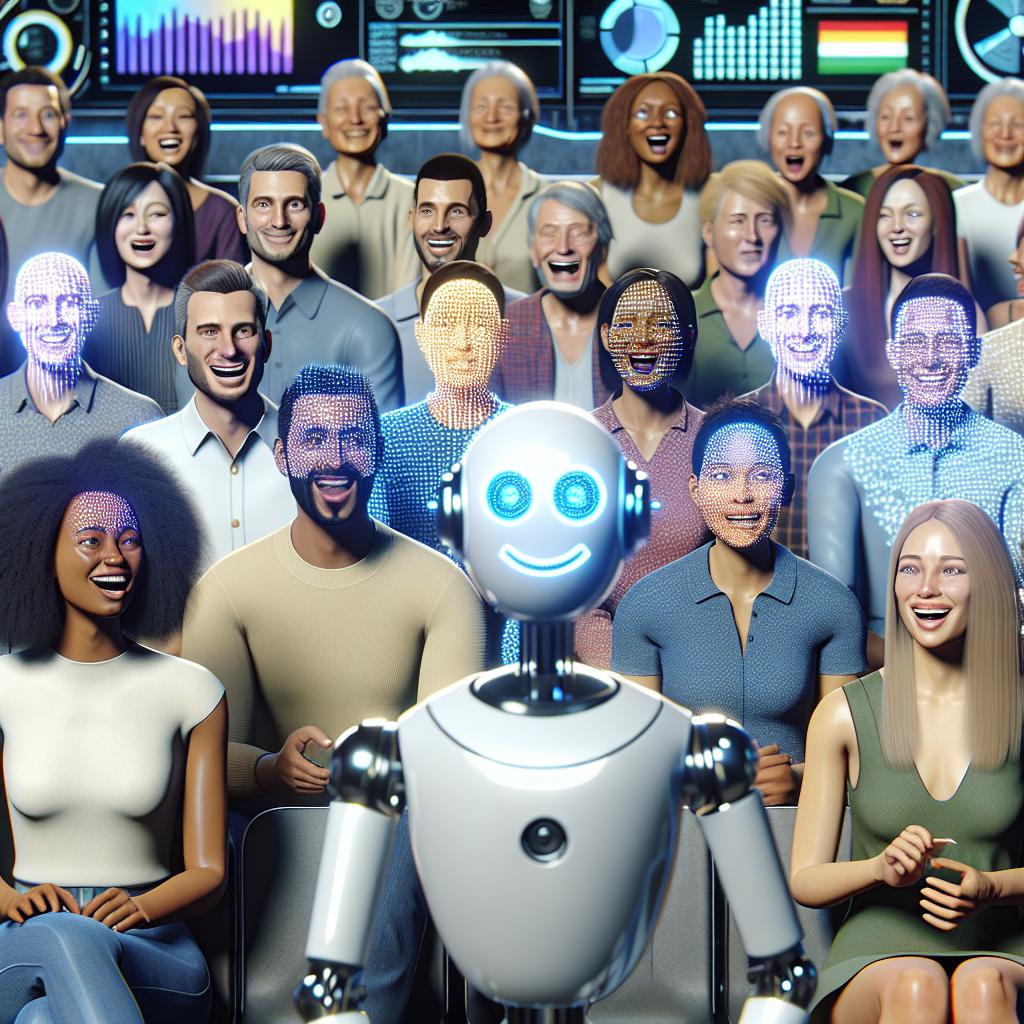
Measuring emotions in focus groups with computer vision helps you capture real reactions—not just post‑hoc opinions. By analyzing facial expressions and engagement cues from video, you can connect emotional peaks (and drops) to specific moments in your stimulus: a pricing reveal, a new packaging detail, a UX flow, a tagline, or a competitor comparison.
- Moment-by-moment emotional engagement tied to your concept, ad, prototype, or discussion segment.
- More objective signals to complement what participants say (and what they might not say).
- Comparable results across groups, iterations, markets, and versions—when the setup is consistent.
- Better debriefs: you can revisit the exact moments that triggered delight, confusion, or skepticism.
Practical tip: Emotion analytics works best when you treat it as a decision signal (where to investigate deeper), not as a “mind-reading” replacement for good moderation and thoughtful research design.
Why measure emotions in focus groups?
Focus groups are powerful because they reveal language, beliefs, and social dynamics. But they also have a well-known limitation: participants don’t always describe their true reactions in a direct way. Sometimes this is unconscious (they can’t articulate it). Sometimes it’s social (they don’t want to look “wrong” in front of others).
That’s where computer vision–based emotion measurement helps. It adds a structured layer of observation: what changed, when it changed, and who reacted. In practice, this makes research teams faster at finding what matters: the feature that surprised people, the moment attention dropped, or the claim that created distrust.
What you gain (in plain terms)
- Higher clarity: identify the exact moments that drive positive or negative emotional response.
- Better prioritization: focus your analysis time on segments with the biggest emotional shifts.
- Less guesswork: reduce reliance on “the room felt like…” impressions during debriefs.
- More actionable outputs: turn “interesting discussion” into decisions and next steps.
If you’re preparing a concept test, ad test, or UX prototype evaluation and want emotion analytics added to your focus group workflow, email info@bastelia.com and tell us: your stimulus type, audience, and desired deliverable (dashboard, report, or both).
What computer vision can measure during a focus group
Emotion detection in focus groups typically relies on video signals that can be extracted reliably when faces are visible and lighting is stable. The goal isn’t to label every inner feeling; it’s to capture consistent, measurable cues that correlate with engagement and reaction.
1) Automated facial coding (expressions + intensity)
The system detects facial movement patterns and maps them to expression categories and/or intensity scales. This is useful for spotting moments of delight, surprise, confusion, skepticism, or frustration—and for comparing versions of a concept.
2) Engagement and attention proxies
Depending on the setup, you can track signals such as face orientation, head movement, and sustained “screen/center” focus. These cues help you identify where attention drops (even if the discussion keeps going).
3) Group-level patterns (the “room effect”)
Focus groups are social by nature. One of the most valuable outputs is not just individual response, but patterns like: synchronized reactions, polarization (two sub-groups reacting differently), or a strong “influencer” effect within the group.

How computer vision emotion detection works (step-by-step)
A good emotion measurement workflow is mostly about clean inputs (video quality + structure) and clear outputs (what you measure and how it ties to decisions). Here’s a practical end-to-end view:
- Define the research moments: segment the session into parts (intro, stimulus A, stimulus B, pricing, packaging, Q&A). These markers make analysis dramatically more useful.
- Capture video correctly: camera angle, lighting and face visibility matter more than most people expect.
- Detect faces & track signals: the system identifies faces across frames and extracts expression/engagement cues.
- Align signals to your timeline: timestamps connect emotional changes to the exact words, claims, or visuals.
- Aggregate by person and group: compare individuals, then view group-level summaries to spot consensus vs. polarization.
- Turn insights into actions: prioritize edits to the stimulus (message, UX flow, packaging, price framing) and validate in the next iteration.
Important nuance: Emotion detection is strongest for comparisons (A vs B, version 1 vs version 2) and for pinpointing moments worth investigating. The best teams combine it with moderation, follow‑up questions, and qualitative coding.
Study setup checklist (data, room, cameras)
If you want emotion signals you can trust, treat setup as part of your methodology. Small improvements here reduce noise and make results far easier to interpret—especially in group settings.
In-person focus groups
- Stable lighting: avoid flicker, harsh backlight, or strong shadows across faces.
- Clear face visibility: minimize occlusion (hands on face, microphones blocking, extreme head turns).
- Seating plan: try to keep participants within a consistent camera field of view.
- Markers: note when each stimulus starts/ends, and when key prompts occur.
Online/remote focus groups (webcam-based)
- Camera at eye level: avoid “laptop looking up” angles that distort the face.
- Ask for a simple setup: front lighting, neutral background, stable internet.
- Consent and transparency: participants should understand how video will be used and stored.
- Consistency: keep the same script and timing across sessions when you want comparisons.

How to interpret results responsibly (and avoid false certainty)
The most common mistake with emotion analytics is treating the output as a final truth. The best approach is more practical: treat the signals as a high-resolution map of where to look. Then confirm with qualitative reasoning.
A simple interpretation framework
- Peaks matter: big shifts usually indicate a stimulus moment worth reviewing (visual, claim, price, or feature).
- Compare people: one participant reacting strongly can reveal a subgroup insight (not noise).
- Look for patterns: repeated reactions across groups are more actionable than one-off spikes.
- Use it to improve questions: emotional dips can guide better follow‑ups (“What changed for you right there?”).
Reminder: facial signals can be influenced by culture, context, individual expressiveness, fatigue, or camera conditions. That’s why validation and thoughtful study design are part of the value—not an optional extra.
Best use cases in market research & UX
Emotion detection shines when there is a clear stimulus and a decision to make. Here are the scenarios where it tends to create the most business value:
Ad testing & creative evaluation
Identify which scenes trigger attention drops, confusion, or delight—then refine edits, pacing, and messaging. Great for comparing multiple versions before scaling spend.
Concept testing & pricing framing
Track reaction to the core value proposition, the “reason to believe,” and the pricing reveal. Emotion signals help you see whether objections are real (and where they start).
UX and product prototype validation
Pair the discussion with moment-by-moment reaction during onboarding, key flows, or feature discovery. The goal: find friction quickly, then re-test after improvements.
Packaging, naming & shelf impact
When you show multiple variants, emotion measurement supports faster comparisons: which option creates positive reactions, which creates uncertainty, and which triggers indifference.
Privacy, consent & compliance
Emotion detection in focus groups often involves processing video of faces. That means privacy and governance must be designed from the start. A solid approach balances three goals: participant trust, legal compliance, and usable insights.

A practical privacy-by-design checklist
- Clear informed consent: explain what is captured, what is measured, and how outputs will be used.
- Data minimization: collect only what you need for the research question; avoid “just in case” capture.
- Secure handling: define access roles, storage locations, and encryption practices.
- Retention policy: keep raw video only as long as required; prefer aggregated outputs for long-term insight.
- Transparency in reporting: communicate limitations and avoid overstating what the model can infer.
Note: This page is informational and not legal advice. If you operate in regulated contexts or across multiple regions, governance should be tailored to your specific requirements and risk profile.
How Bastelia can help
Bastelia helps teams move from “interesting research” to decisions with evidence. If you want to integrate computer vision emotion analysis into focus groups, we can support the full workflow: study design, technical implementation, governance, and reporting.
A delivery approach that works in the real world
- Use-case definition: what decision will this analysis support (creative, UX, pricing, positioning)?
- Setup & instrumentation: camera/room/webcam guidance + timeline markers for clean alignment.
- Model & workflow: extraction, aggregation, and outputs designed for your research team.
- Governance: consent, retention, access control, and documentation-by-design.
- Results package: clear insights + recommended next actions (and what to re-test next).
Want a quick next step? Email info@bastelia.com with your stimulus type (ad, prototype, concept), participant count, and whether the study is in-person or remote.
Explore related Bastelia services
-
AI Solutions for Business
See how Bastelia ships AI systems that integrate into real workflows and deliver measurable outcomes.
-
AI Consulting & Implementation Services
From diagnosis to rollout: a practical path to operational AI (not just prototypes).
-
Data, BI & Analytics
Build trusted KPIs and analytics foundations that make emotion insights easier to action.
-
Social Listening & Sentiment Analysis
Combine what people say online with what they feel in testing for a fuller picture of perception.
-
Compliance & Legal Tech
Operational governance for AI: documentation, workflows, evidence, and privacy-by-design practices.
-
Contact
Prefer a direct conversation? Use the contact page or email us anytime.
FAQs about measuring emotions in focus groups with computer vision
Is emotion detection in focus groups reliable?
It can be reliable for identifying relative changes (peaks, drops, comparisons between versions) when video quality and study design are consistent. The key is treating the output as an evidence layer that complements moderation and qualitative interpretation.
What emotions can computer vision typically detect?
Many systems focus on a small set of widely used expression categories (for example: positive/negative affect, surprise, confusion signals), plus intensity and engagement cues. The most valuable output is often the timeline of change—not just a label.
Do we need special cameras or lab hardware?
Not always. Many setups work with good-quality webcams or standard cameras if lighting, framing, and face visibility are planned. For larger rooms or more complex group dynamics, multi-camera setups can improve capture quality.
Can this work for online focus groups (Zoom/Teams)?
Yes—remote sessions can be a strong fit because participants face their camera most of the time. The key is a simple participant setup guide (camera height, lighting, background) and clear consent language.
Does emotion analytics replace a moderator?
No. Moderation remains essential for context, probing, and interpretation. Emotion analytics makes the moderator and research team faster at finding the moments that matter and asking better follow-ups.
How do you combine emotion signals with qualitative insight?
We align emotion timelines to session markers and transcripts. That makes it easy to review: what was shown/said at a peak, who reacted, and what the group discussed immediately after. The result is a cleaner path from data to decisions.
What about GDPR and participant consent?
Consent, minimization, secure handling, and clear retention rules are the foundation. If you need a more formal governance setup, Bastelia can help design privacy-by-design workflows and evidence-ready documentation.
What do we get at the end: dashboard, report, or both?
It depends on your team’s workflow. Many clients want a concise report with key moments and recommendations, plus a structured dataset (or dashboard) so teams can compare stimuli and track improvements across iterations.
Ready to add emotion analytics to your next focus group?
If you want to measure emotional engagement with computer vision—without turning your study into a lab experiment—let’s make it practical. Email us with your context and we’ll reply with concrete next steps.
Suggested email details: industry, stimulus type (ad/UX/concept), in-person vs remote, participant count, and your timeline.